
It’s 10:15 AM on a Tuesday in Abu Dhabi. Your morning rush is finally tapering off when a person in a professional polo shirt walks in, clipboard in hand, and flashes a badge. The health inspector has arrived.
Since the start of 2025, the stakes for this moment have skyrocketed. In the UAE alone, authorities like ADAFSA have already ordered the closure of over 37 food establishments in a single sweep for repeated hygiene and storage violations. Globally, the “cost of failure” has never been higher; with the average QSR net profit margin squeezed to just 5-8%, a single 48-hour closure can wipe out an entire month’s profit.
But the real threat in 2026 isn’t just the fine—it’s the digital aftermath. In the era of “viral call-out culture,” a “Closed by Health Dept” sign is photographed, uploaded to TikTok, and seen by 50,000 local customers before your maintenance crew even arrives to fix the issue.
The 60-Second “Vibe Check” An inspection doesn’t actually begin with a thermometer; it begins with a psychological “vibe check.” Within the first minute, an inspector decides if they are going to be a validator or an interrogator.
- The “Interrogator” Trigger: Handing over a coffee-stained, handwritten binder where the same pen and handwriting “miraculously” filled out three days of logs in five minutes. This is a red flag that screams “pencil-whipping” and lack of control.
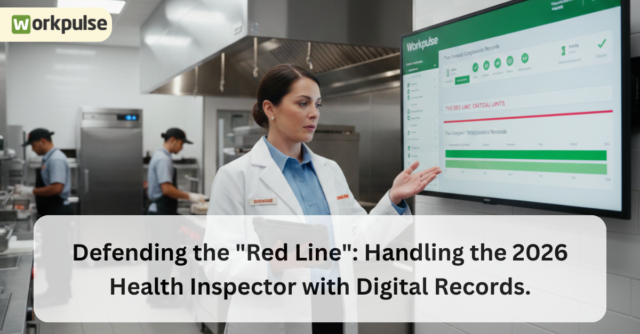
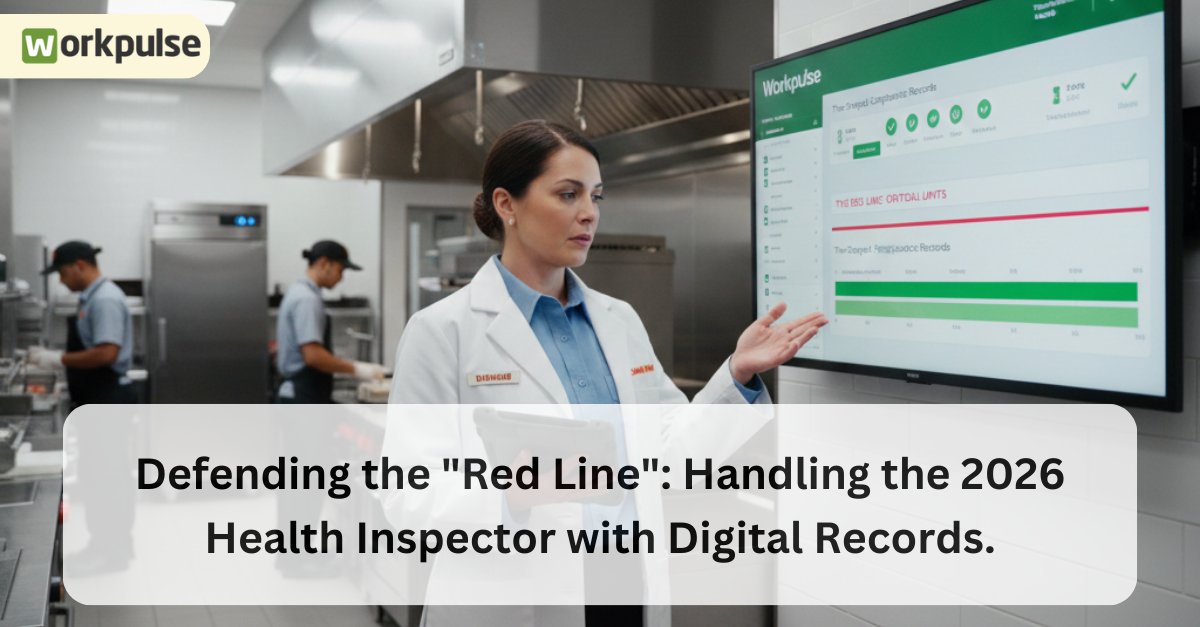
- The “Validator” Trigger: Your manager pulls up a high-resolution Workpulse rOS dashboard on a tablet. Before the inspector even reaches for their gloves, they see time-stamped, metadata-backed proof that your walk-in temps, sanitizer levels, and handwashing logs were 100% compliant as of 10 minutes ago.
In 2026, you don’t win an audit by being perfect; you win it by demonstrating Operational Command. Statistics show that digital-first stores experience 30% shorter inspection times because when an auditor sees an unshakeable digital system, they stop looking for “hidden fires” and start validating your success.
The “Psychology of the Audit”: Turning Suspicion into Confidence
In 2026, the success of a health inspection is decided as much by behavioral psychology as it is by the temperature of your walk-in cooler. Food safety auditors are human; they operate on a spectrum of trust. When they walk into a high-volume Dunkin’ during a morning rush, they are looking for “signals of control.”
The “Professionalism Bias” Psychologically, inspectors are prone to what experts call the “Professionalism Bias.” In a recent 2025 study of municipal health audits, establishments that presented digital-first compliance records were found to have 30% shorter inspection times than those using paper. Why? Because a digital dashboard communicates that safety is a proactive system, not a reactive chore.
When your manager hands over a tablet with Workpulse rOS, they aren’t just showing data; they are providing “Metadata Certainty.”
- The Metadata Difference: A handwritten log can be “pencil-whipped” (filled out all at once) in five minutes. However, a digital record comes with an immutable “Digital Fingerprint”—GPS coordinates, a non-editable time-stamp, and a user ID.
- The Result: The inspector immediately stops questioning if the work was done and starts focusing on what the data shows. This shift from “interrogator” to “validator” is the difference between a 20-minute walkthrough and a 3-hour deep dive.
Standardizing the “Compliance Mindset” By 2026, the FDA’s FSMA 204 and global bodies like ADAFSA have moved toward “Digital Acceleration,” making real-time data a “license to operate.” For a Gen Z or Alpha crew member, the psychology shifts too. When they know their task is time-stamped and visible to the owner in real-time, the “margin for error” narrows.
Insight for 2026: Auditors in this decade are increasingly tech-savvy. They know how to spot a “faked” paper log from across the kitchen. By providing a transparent, digital-first window into your operations, you aren’t just passing an audit—you are building a Reputation of Compliance that can protect your brand for years.
The “Red Line” Risks: Avoiding 2026’s “Imminent Health Hazards”
In the world of health inspections, there is a “Red Line”—a threshold where minor points turn into “Imminent Health Hazards” that trigger an immediate, mandatory closure. In 2026, the two biggest killers of QSR profit are the “41/140 Rule” (temperature control) and the “No Hot Water” clause.
The Temperature Trap: A 2026 Case Study Consider the reality of a busy Dunkin’ unit in the summer of 2025. A walk-in cooler’s compressor fails at 2:00 AM.
- The Paper Way: The morning crew doesn’t check the temp until 8:00 AM. By then, $4,000 worth of dairy and egg products have been sitting at 55°F (13°C) for six hours. If the inspector walks in at 9:00 AM, you aren’t just getting a citation; you are being shut down for “potentially hazardous food temperature violations.”
- The Workpulse rOS Way: The system integrates with IoT Bluetooth Sensors. At 2:15 AM, when the temp hits 42°F, an automated alert hits the manager’s phone. The issue is caught, the stock is moved, and the repair is logged before the sun even comes up.
The “Corrective Action” Defense Inspectors in 2026 don’t expect perfection—they expect accountability. If an inspector finds a reach-in cooler at 45°F, your defense isn’t “I didn’t know.” Your defense is showing the Digital Audit Trail. Using Workpulse rOS, you can show the inspector:
- The Detection: Exactly when the system flagged the temp spike.
- The Action: A logged entry showing the technician was called at 7:15 AM.
- The Mitigation: Photo evidence of the “Discarded Product” log, proving you didn’t serve a single unsafe latte.
Stat Check: According to 2026 QSR operational benchmarks, stores using automated IoT monitoring see a 60% reduction in food waste during equipment failures and a 90% success rate in defending “Corrective Action” disputes with health officials.
The “Hot Water” Crisis Recent 2026 news highlights a surge in closures due to malfunctioning water heaters—an “auto-fail” in most jurisdictions. With rOS, handwashing station checks are digitized. If a crew member logs a “Low Temp” water check, the system prevents them from closing the task until a “Maintenance Ticket” is generated. You are no longer defending the “Red Line”; you are moving it.
Managing “Multiple Points of Failure”: The Multi-Unit Challenge
For a multi-unit Dunkin’ franchisee in 2026, the biggest fear isn’t the store they are currently standing in—it’s the store they aren’t in. When you own 5, 10, or 20 locations, you are inherently vulnerable to the “Absentee Manager” syndrome. If Store #4 stops checking sanitizer levels or “pencil-whips” their cooling logs, it’s your name on the business license that takes the hit when the inspector arrives.
The “Portfolio-Wide” Visibility Gap In 2026, industry data shows that multi-unit franchises without centralized digital oversight have a 24% higher rate of “Critical Violations” compared to single-unit owner-operators. The reason is simple: consistency. In a paper-based world, you have to physically drive to a location to see if the safety binder is even being used. By the time you find a gap, the health department might already be there.
Workpulse rOS: Your Remote Command Center Workpulse rOS solves this by creating a real-time “Health & Safety Command Center” on your phone.
- The “Pre-Audit” Advantage: You can run a “Self-Audit” across your entire network in 60 seconds. If Store #12 hasn’t logged their 10 AM handwashing sweep, you get a push notification. You can call the manager before an inspector walks in.
- Standardizing the Brand: Whether your store is in a high-traffic mall or a quiet suburb, rOS ensures the same digital SOPs (Standard Operating Procedures) are followed. The system “locks” tasks until they are completed, meaning the morning shift can’t “skip” the fridge temps and move to the donuts.
The “Unified Defense” Strategy When an inspector visits one of your locations, they often look for patterns across your entire brand. If they find a violation in Store A, they may be more aggressive when they visit Store B. Using a centralized system allows you to:
- Instantly Push Updates: If a new local regulation is announced (like the 2026 labeling updates in the UAE or USA), you can push the new checklist to every store simultaneously.
- Comparative Analytics: Identify which region or manager is struggling with compliance trends—such as consistent “Low Temp” dishwasher logs—and deploy training resources where they are needed most.
Insight for 2026: Leading franchisees are moving away from “managing people” and toward “managing systems.” By the end of 2026, having a centralized digital food safety record won’t just be an advantage—it will be a requirement for any franchisee looking to scale or renew their agreement.
The “Paperless” Payoff: Efficiency and Accountability
In 2026, the phrase “time is money” has never been more literal for a Dunkin’ franchisee. With labor costs in markets like the US and UAE rising by an average of 6.3% year-over-year, every minute your staff spends on non-revenue-generating tasks is a direct hit to your bottom line.
Recovering the “Lost Hour” Traditional paper-based food safety is a massive time-sink. Between hunting for lost binders, finding a working pen, and manually filing “temperature logs” at the end of the week, the average QSR manager loses approximately 5 to 7 hours per week on administrative compliance.
- The Digital Shift: By switching to Workpulse rOS, that administrative burden is slashed by up to 90%.
- The Math: For a 5-unit network, that’s over 1,200 labor hours reclaimed per year—time your managers can now spend on the floor coaching the crew, driving drive-thru speed, and improving guest satisfaction.
Photo Verification: The “Smoking Gun” of Compliance Handwritten logs are just words on a page. In 2026, health inspectors and insurance adjusters want visual proof.
- The rOS Advantage: When a crew member performs a “Cleaning Check” for the ice machine, the system requires a time-stamped photo upload to close the task.
- Real-World Defense: If a customer claims they got ill from a “dirty” store, you don’t just show a log saying you cleaned; you show a gallery of high-resolution, dated photos proving the equipment was sanitized. This “Digital smoking gun” is often enough to dismiss frivolous liability claims before they reach a courtroom.
Building a “Self-Audit” Culture for Gen Z & Alpha The newest generation of workers (Gen Z and the emerging Gen Alpha) has zero patience for “analog” bureaucracy. They find clipboards and binders “cringe” and inefficient. However, they are highly proficient with tablets and apps.
- Frictionless Habits: By moving safety logs to a tablet, you are “meeting them where they live.”
- The “Nudge” Effect: Workpulse rOS uses push notifications to “nudge” the crew when a sanitizer check is due. It turns a “scary” health requirement into a simple, gamified task they can check off their list.
Insight for 2026: In an industry where 80% of consumers now prioritize “good technology” when choosing where to eat, having your crew operate on sleek tablets doesn’t just help with safety—it projects a modern, high-standard brand image to everyone in your lobby.
Leading with Transparency
The “Red Line” in a 2026 health inspection is no longer a static point on a chart—it is a dynamic measure of your store’s operational transparency. In an era where global health authorities like ADAFSA and the FDA are moving toward “Data-Driven Oversight,” trying to hide behind a paper binder is a losing strategy.
Summary: The Three Pillars of Digital Defense To successfully defend your brand in 2026, you must master three things:
- Detection: Catching “Imminent Hazards” (like temp spikes) before the inspector does using IoT sensors.
- Verification: Proving the work was done with immutable metadata (GPS and time-stamps) rather than ink.
- Correction: Demonstrating a “Culture of Accountability” by showing exactly how you fixed a problem, not just that you had one.
Final Thought: Winning the First 60 Seconds An inspection is won or lost in the first minute. When you lead with Workpulse rOS, you aren’t just presenting records; you are projecting unshakeable command. You are telling the inspector that your Dunkin’ is a place where food safety isn’t an accident—it’s a system.
In 2026, don’t just “fear” the clipboard. Take the clipboard away by offering a digital dashboard that speaks for itself. Your reputation, your margins, and your peace of mind depend on the shift from reactive paperwork to proactive digital defense.
Stop defending. Start leading. Protect your “Red Line” with Workpulse rOS.